
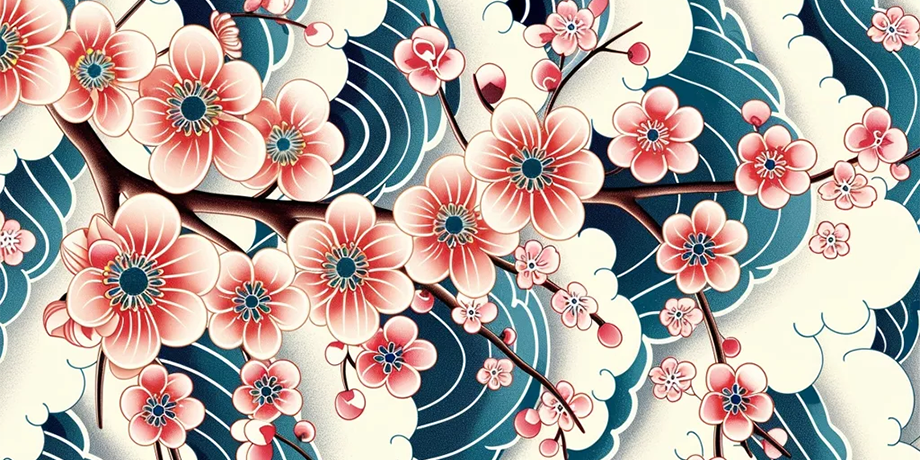

Wa-Gara: The Sacred Geometry and Stories Behind Japanese Patterns
Wa-Gara (伝統の和柄) are traditional Japanese decorative patterns, each carrying a rich history, profound symbolism, and a distinct aesthetic identity. Originating centuries ago—often inspired by family crests (Kamon), nature, and classical literature—these geometric motifs were historically worn on kimonos and samurai armor as symbols of protection, strength, and fortune.
Unlike purely decorative designs, every Wa-Gara pattern tells a specific story:
- Asanha (Hemp Leaf): A sharp, geometric pattern representing rapid growth, resilience, and good health, historically gifted to protect and empower the wearer.
- Seigaiha (Ocean Waves): Concentric circles depicting peaceful, endless waves—a prayer for everlasting tranquility and good fortune.
- Tomoe (Swirling Crest): A dynamic, fluid emblem symbolizing the cycle of life, energy, and cosmic harmony.
- Sakura & Fuji (Cherry Blossoms & Sacred Peak): The ultimate symbols of transient beauty, noble spirit, and timeless grandeur.
In our collections, we honor these ancient motifs by reinterpreting them through a contemporary lens. By blending classical linework with modern digital art, neon accents, and streetwear graphics, we transform historic Wa-Gara into modern wearable art. Wearing these patterns is a way to carry centuries of Japanese wisdom, pride, and artistic heritage with you wherever you go.